
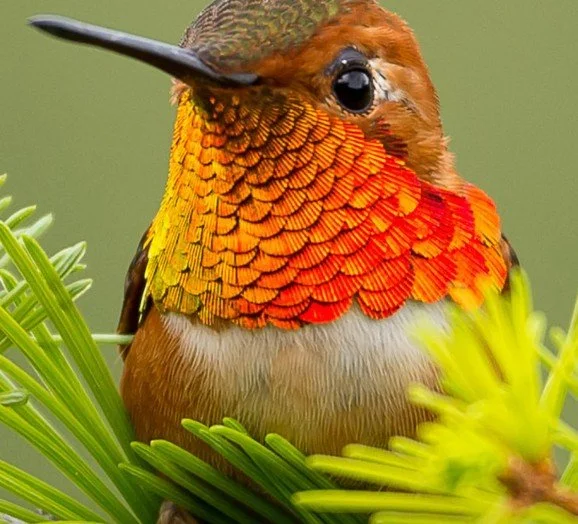
Join us on Thursday to hear a fun and fascinating presentation on hummingbirds. Hummingbirds are among the most fascinating and remarkable birds in the world. With approximately 300 species worldwide, these tiny, brilliantly colored birds are known for their extraordinary flight abilities, remarkable speed, and seemingly endless energy. They can hover in place, fly forward and backward, and change direction almost instantaneously. Their wings beat so rapidly that they create the distinctive humming sound that gives them their name.
Despite their small size, hummingbirds have enormous appetites and incredibly high metabolisms. They feed primarily on flower nectar for energy but also consume tiny insects and spiders for essential protein. Their relationship with flowering plants makes them important pollinators. From their remarkable courtship displays and tiny nests to their impressive migratory journeys, hummingbirds offer a fascinating glimpse into the wonders of nature.
Hummingbirds and Their Annual Journey Through Texas
Texas plays an important role in the annual migration of hummingbirds, providing both breeding habitat and an essential passageway for birds traveling between North America and Mexico.
In North Texas, the Ruby-throated Hummingbird is our most familiar visitor. These tiny travelers generally begin arriving in the spring, with migration occurring from late March through May. They spend the warmer months feeding, nesting, and raising their young before beginning their southbound journey in late summer and fall.
During fall migration, hummingbirds become particularly noticeable in North Texas, with activity often increasing from July through September and continuing into October. Many travel south toward Mexico and Central America, while others follow the Texas Gulf Coast. Some Ruby-throated Hummingbirds make the remarkable journey across the Gulf of Mexico in a nonstop flight.
Their seasonal visits remind us that even the smallest creatures undertake extraordinary journeys and depend on healthy gardens, flowering plants, and reliable food sources along the way.